
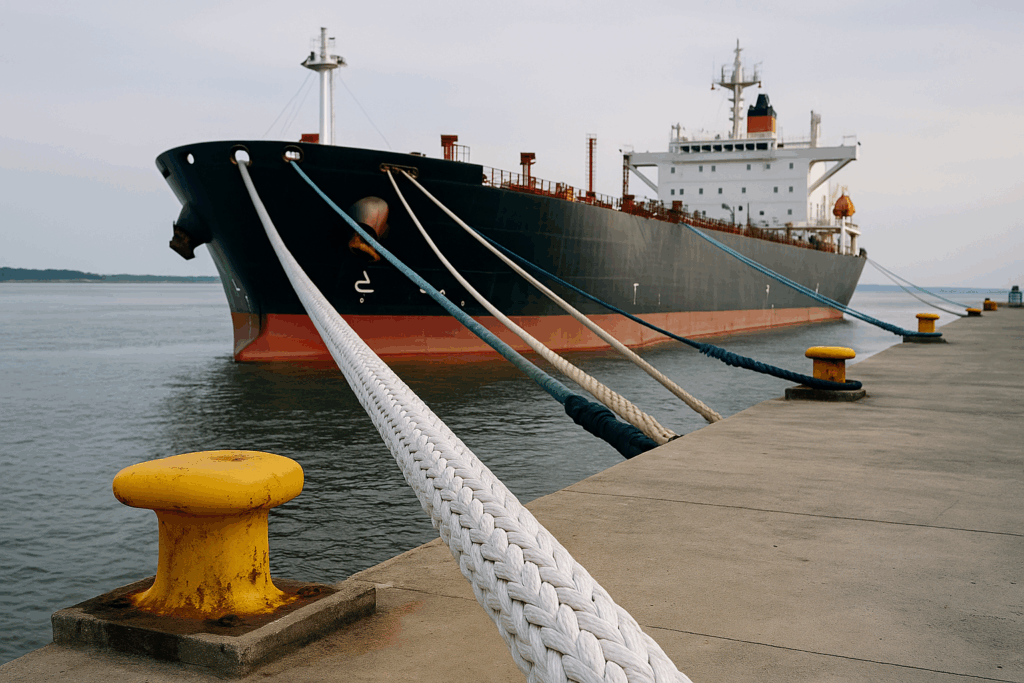
Mooring Basics That Prevent Incidents
Five fundamentals that keep crews and lines safe: snap-back awareness, lead/angle management, chafe protection, tension monitoring and clear radio protocol. Small improvements make big differences.
Introduction: Why Mooring Basics Matter
Mooring operations remain one of the most hazardous activities on any vessel. Despite innovation in winches, ropes, and fenders and mooring services, the core risks haven’t changed: high loads, moving lines, and human factors. A single failure can cause injury, damage equipment, or lead to costly downtime.
The encouraging news is that most incidents stem not from rare, unpredictable events but from preventable oversights in technique and awareness. By focusing on five core fundamentals—snap-back awareness, lead and angle management, chafe protection, tension monitoring, and clear radio protocol—crews can significantly reduce risks. These aren’t advanced technologies or costly upgrades; they’re practical habits that reinforce a culture of safety.
1. Snap-Back Awareness: Recognizing the Invisible Danger
Few hazards in mooring are as sudden and unforgiving as a snapping line. When a synthetic rope parts under load, it recoils with enormous force. The danger zone, or snap-back zone, can extend farther than crew expect.
What causes snap-back?
- Over-tensioning lines
- Uneven load distribution across mooring winches
- Sudden vessel movement due to swell or passing traffic
- Undetected wear and tear on lines
Best practices for crews
- Mark snap-back zones clearly on deck with paint or non-slip markers.
- Train crew regularly on the dangers of standing in the bight of a line.
- Use low-snap ropes (e.g., HMPE with reduced recoil) when possible.
- Maintain escape routes and keep decks tidy to avoid entanglement.
Tip: Add a pre-berthing toolbox talk that calls out snap-back zones and escape routes for the day’s conditions. Review our STS Safety Policy for more guidance.
2. Lead and Angle Management: Keeping Lines Efficient and Predictable
A mooring line is strongest when it runs fair and straight. Poor lead angles weaken holding power and accelerate wear on lines and fittings.
Why lead matters
- Excessive angles place uneven stress on bollards and fairleads.
- Twisting or crossed lines reduce efficiency and complicate adjustments.
- Improper vertical lead causes chafing against the ship’s rail or quayside.
How to manage leads effectively
- Plan the lead pattern before making fast—anticipate tide, wind, and traffic.
- Use shore bollards strategically to maintain symmetry and balance.
- Avoid crossing lines unless absolutely necessary.
- Inspect sheaves and rollers—stuck or corroded fittings are a silent hazard.

Need help choosing the correct fender configuration for your berth? See our Introduction to STS Transfer Operations or contact us.
3. Chafe Protection: Extending Line Life and Reducing Failures
Chafe is a quiet killer of mooring ropes. Even high-tech HMPE or polyester lines degrade quickly when dragged over rough edges or left unprotected.
Key sources of chafe
-
- Contact with sharp quay edges or rough concrete
- Unlined fairleads or damaged rollers
- Long-term friction under tidal surge
Practical solutions
- Chafe guards and sleeves: Place at wear points.
- Routine inspections: Watch for glazing, broken yarns, or discoloration.
- Rotate lines: Distribute wear across primary and secondary lines.
- Protective jackets/coatings: Consider lines with sacrificial covers.
Explore our overview of reliable mooring services for inspection and chafe mitigation support.
4. Tension Monitoring: Keeping Lines Balanced and Safe
The safest mooring arrangement is one where no single line carries a disproportionate load. Over-tensioned or slack lines can trigger failures, especially under dynamic conditions like swell or passing wakes.
Why monitoring matters
- Uneven stress accelerates rope fatigue.
- Slack lines can whip violently when reloaded.
- Sudden load transfer increases snap-back risk.
Methods of monitoring
- Manual monitoring: Trained eyes/hands with regular adjustments.
- Winch load indicators: Digital systems showing real-time tensions.
- Central monitoring: Integrated load management at large terminals.
Crew practices
- Recheck lines in the first hour after mooring.
- Adjust gradually rather than sudden releases.
- Communicate intended load changes before adjustments.
5. Clear Radio Protocol: Eliminating Miscommunication
Communication breakdowns are a top contributor to mooring accidents. When vessels, pilots, tugs, and mooring gangs don’t share timing or commands, mistakes multiply.
Elements of clear radio protocol
- Standardized phrases: Avoid slang and ambiguous signals.
- Closed-loop communication: Confirm received instructions (e.g., “Line two slackened, understood”).
- Channel discipline: Keep chatter off the working channel during critical moments.
- Role clarity: Everyone knows who issues orders and who confirms.
Read more in our FenderSTS blog and safety policy.
Beyond the Basics: Building a Safer Mooring Culture
These fundamentals provide a strong foundation, but operators can go further:
- Invest in training drills: Practical, scenario-based training reinforces habits better than manuals.
- Leverage technology: Modern fiber ropes, quick-release hooks, and automated tension monitoring enhance safety.
- Audit mooring equipment regularly: Rusted bollards or seized rollers are common weak links.
- Foster reporting culture: Encourage crew to speak up on unsafe practices or near-misses.
Remember: small improvements compound into significant differences in safety, uptime, and cost. Need help? Talk to FenderSTS.
Conclusion: Fundamentals First
The maritime industry balances tradition and innovation. While advanced mooring technologies help, the greatest safeguard remains attention to the fundamentals.
By practicing snap-back awareness, managing leads and angles, protecting against chafe, monitoring tension, and following clear radio protocols, crews reduce risk and build confidence in every operation.
At FenderSTS, we believe safe mooring starts with the basics. With the right fundamentals in place, ships berth more smoothly, ports operate more efficiently, and—most importantly—crews return home safely.