
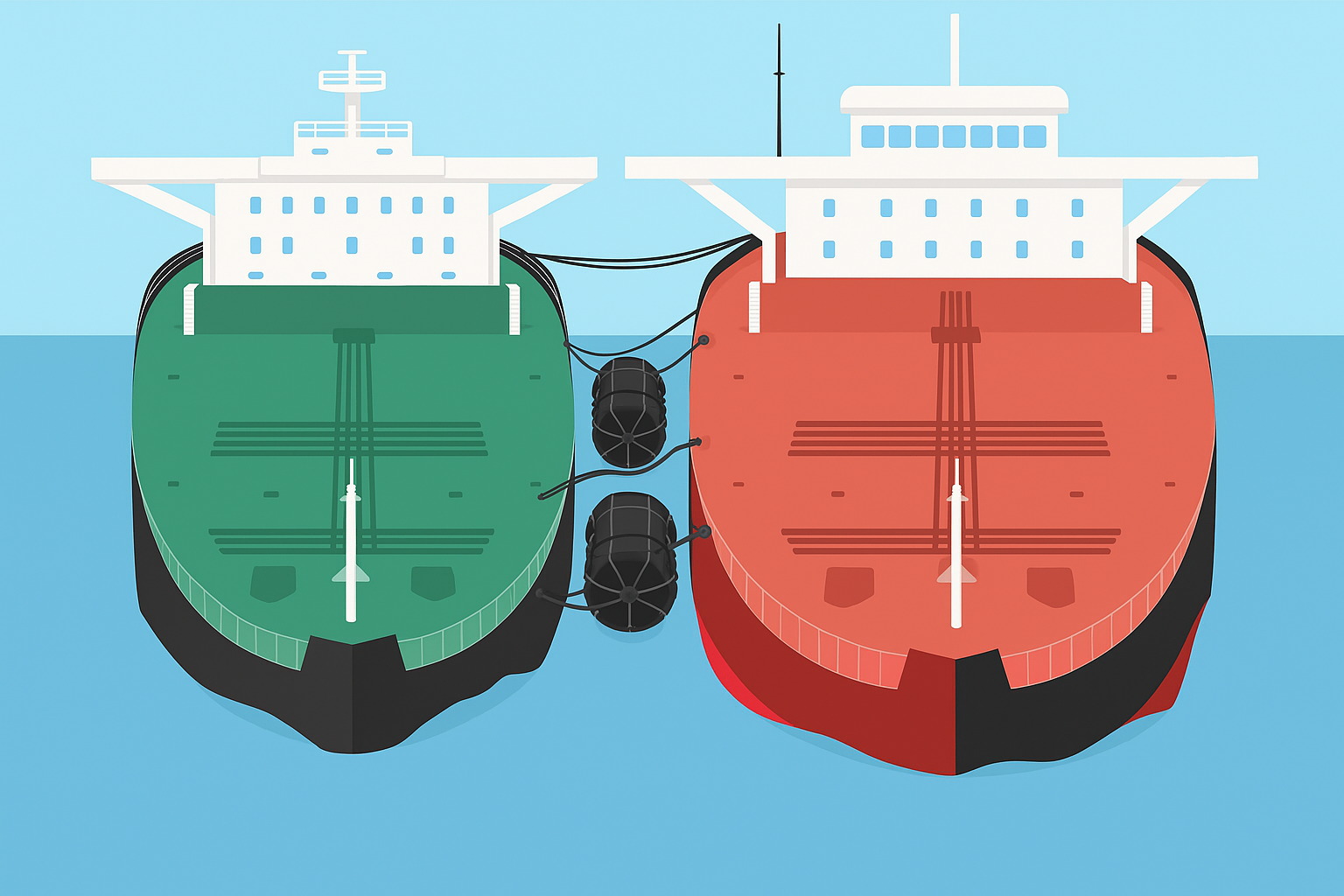
Safe Ship-to-Ship (STS) Procedure
A ship-to-ship (STS) transfer is one of the most critical operations in the maritime industry. It allows liquid cargo, such as crude oil or refined products, to be safely moved from one vessel to another while at sea. These transfers can take place while anchored or underway. Because of the high risks involved—collision, pollution, or equipment failure—STS operations require detailed planning, safety checks, and close coordination.
This article outlines how FenderSTS ensures safe and efficient STS operations, step by step.
Why STS Operations Matter
STS transfers provide flexibility and efficiency by avoiding port calls, saving time, and reducing costs. They are essential in regions where port infrastructure is limited or when vessels need to optimize routes. But efficiency must never compromise safety. Even minor errors in planning or execution can put crew, vessels, and the environment at risk.
Following International Guidelines
At FenderSTS, every operation follows the Ship-to-Ship Transfer Guide published by the Oil Companies International Marine Forum (OCIMF). This guide sets the global standard for safe and efficient STS transfers. It also outlines five critical checklists that must be completed at different stages:
- Pre-fixture information
- Before operations commence
- Before run-in and mooring
- Before cargo transfer
- Before unmooring
Each checklist must be completed and signed before the vessels move on to the next stage.
STS Mooring Safety Checks – Step by Step
Here’s our streamlined approach to ensuring every operation runs safely:
🚢 1. Compatibility Check
- Compare vessel size, displacement, and equipment
- Confirm fender and hose arrangements
📄 2. Pre-Arrival Information
- Gather data from both vessels
- Share with the mooring master and stakeholders
🛡️ 3. Fender Deployment
- Position primary fenders along parallel body line
- Place secondary fenders above waterline at lowest freeboard
⚓ 4. Mooring Line Setup
- Connect spring lines (stop forward & aft movement)
- Connect breast lines (stop lateral movement)
- Connect head & stern lines (prevent combined movement)
- Adjust offsets for safe clearance
🌦️ 5. Weather & Risk Monitoring
- Review forecast and get live updates from support craft
- Suspend operations if wind, swell, or weather exceed limits
👁️ 6. Continuous Supervision
- Inspect moorings, fenders, and hoses regularly
- Record all checks and update stakeholders

sts mooring safety checks list all steps
Communication and Safety
Clear communication is vital throughout the STS process. FenderSTS maintains 24/7 client communication, while ensuring mooring masters can focus on critical stages without distraction. If any incident arises, emergency procedures are immediately activated, and all stakeholders are informed with a full written report.
Why Choose FenderSTS Service?
By choosing FenderSTS, clients are assured of:
- Full compliance with international standards
- Reduced operational risks
- Transparent communication at every stage
- Swift emergency response if needed
STS operations are complex, but with the right planning, equipment, and expertise, they can be carried out smoothly and safely—every time.
Ready for a Safe, Efficient STS Operation?
Talk to our specialists about your next transfer and ensure full compliance with international safety standards. 24/7 global support, expert team, and trusted solutions for safe ship-to-ship transfers. Our team is ready 24/7 to support your STS needs.